💼 Case Studies
Examples of my experience as a Design Leader
- Org Growth and Scaling
- eCommerce Strategy & Design
- Player-coach
- Leading AI Adoption
- Leveraging Discovery to Delivery
- Strategic Visioning
- Cross-functional Influence
- Modeling Craft and Acumen
- Service & Systems Design
- Contact Center research
- Research practice from scratch
- Strategic Partnership
- Design System leadership
🛠️ Projects & Products
Projects and Products I've led
My Experience
Leveraging Service Design
Driving more coherent system experiences
👇 Skip the preamble and jump straight to the case study:
Service Design and examining complex systems surrounding any potential solution have been a consistent part of my process for years. Beginning at Exadel where I led a variety of consulting projects ranging from 0→1 Financial Enterprise and municipal permitting applications to Usability studies, like one for a toll road company - E470 - in Colorado.
View the E470 project in detail →
-
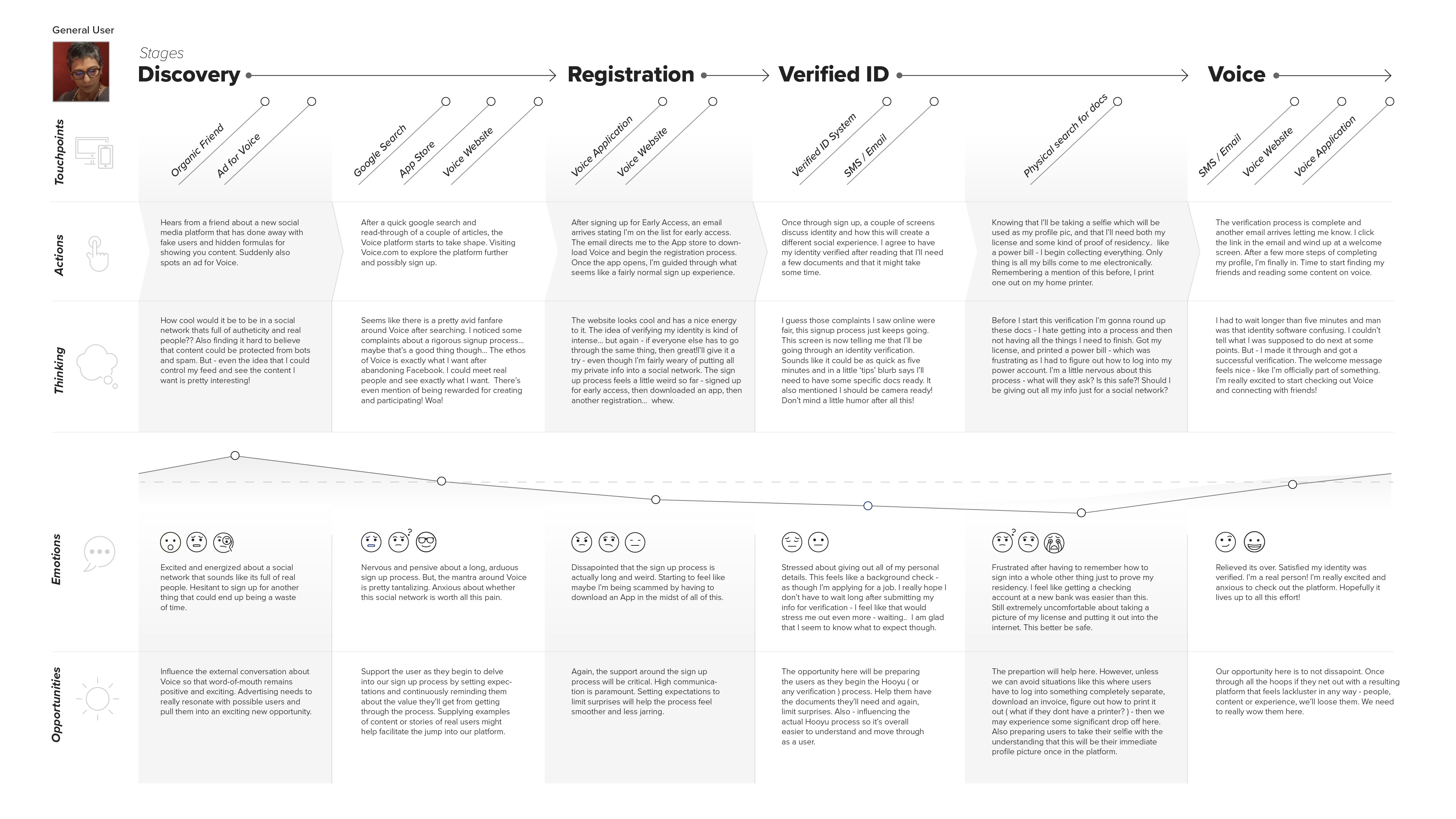
A Journey Map artifact from Voice depicting KYC workflows
To best reveal and represent intricate relationships of how service-experiences impacted various users, I’ve leveraged journey and ecosystem mapping, blueprinting, context inquiries and more across roles and projects to help depict system and service-level realities and solutions.
📹 15+
Context Inquiries
🗺️ Blueprints
CSR Journeys
🕵️ 0→1
Research Practice
-
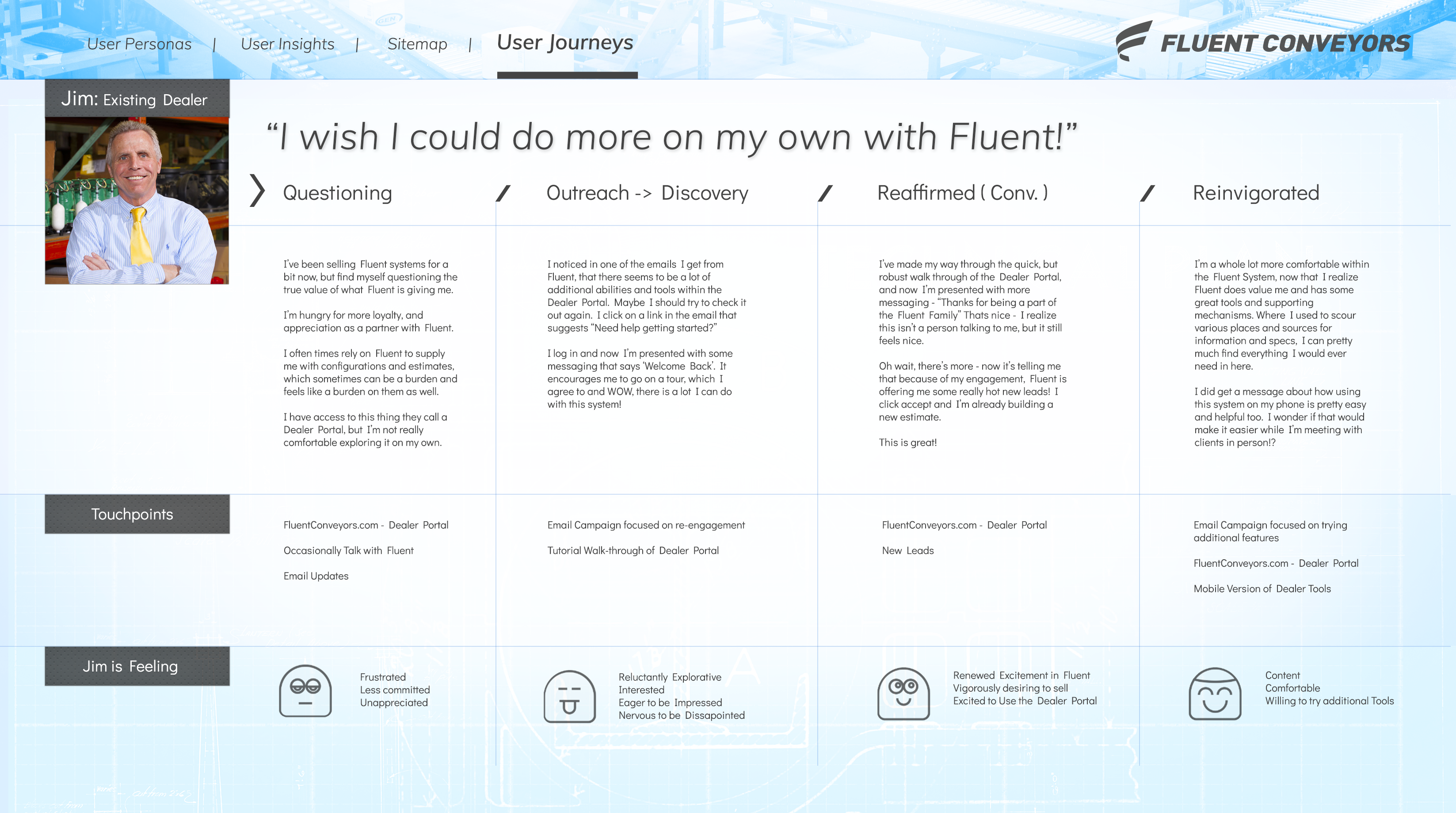
A journey from Fluent Conveyors
Platform coherence leveraging Service Design
At Ozmo, our SaaS offerings within the tech support space had multiple touchpoints across our customers’ ecosystems, affecting different user groups at various points typically across broad Service-level journeys.
-

A view of a CSR-facing portion of Ozmo's Support SaaS Ecosystem.
An end-user for example might choose to Self Support their tech support issues using one of our customer’s support ecosystems. Ozmo’s Self Support solution was integrated into enterprise ecosystems like AT&T, Verizon, or Rogers and as users engaged, it was critical to explore graceful hand-offs to Customer Service and potentially our other product, Ozmo for Agents.
-
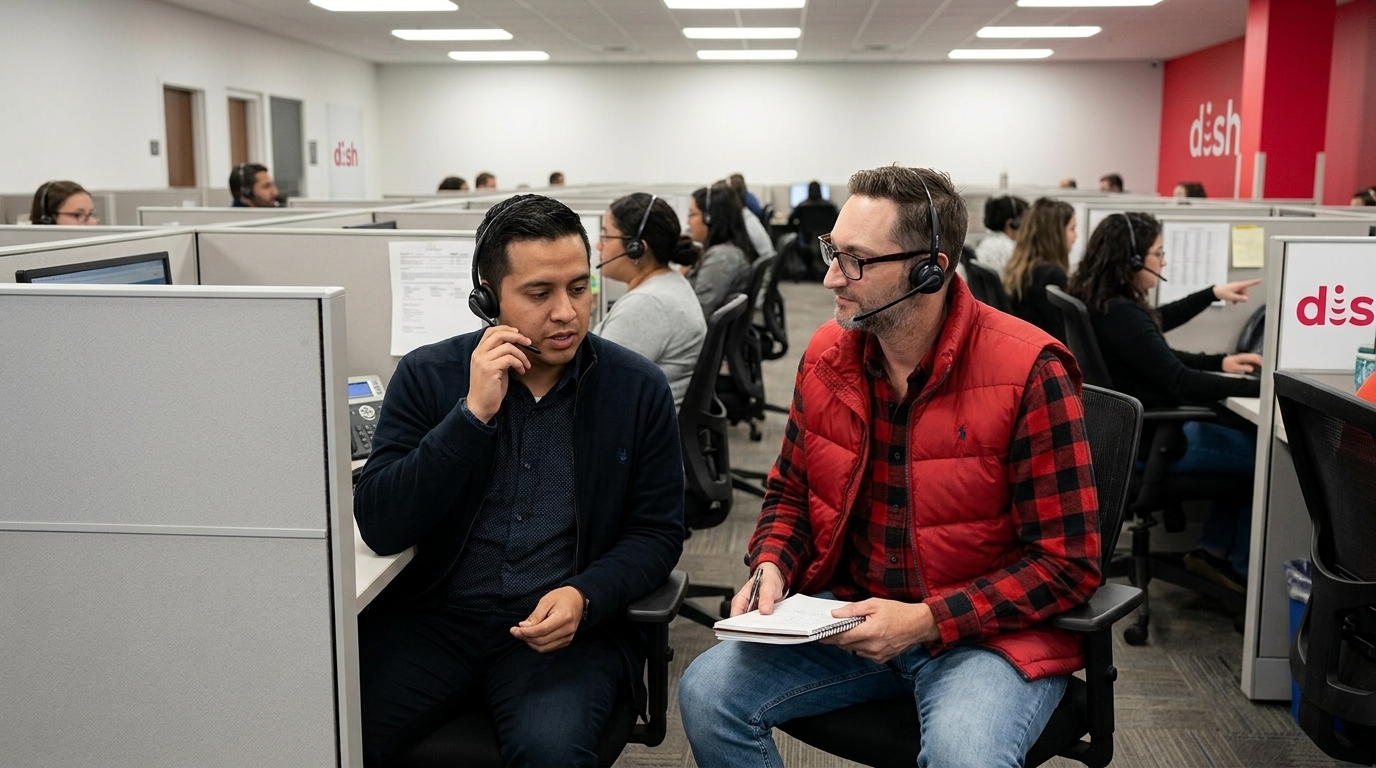
Sitting with a CSR agent onsite during a user interview
I led repetitive and consistent onsite, context inquiries where design and other cross-functional colleagues we intentionally included could observe at what points the CSR would shift into our product and why. This level of observation and study enabled countless new innovative features and explorations on how Ozmo could be more competitive amongst the typical support agent environment. This was especially critical in the advent of advancing AI capabilities where this direct observation led to automation innovations and workflow simplification.

Here's an example of how I leveraged Service Design to reduce cognitive burden for CSR agents:
💼 Case:
One early example of this was through observation, we witnessed the repetitive workflow step where CSRs would document their call summary into their CRM platform, detailing the customer interaction.
⚠️ The problem:
With Ozmo occupying a space shared with many other tools for CSR workflow, asking them to remember all the steps they took at the end of their experience supporting the customer was a heavy cognitive burden.
🛠️ Process:
As part of Ozmo’s AI evolution, I was constantly evaluating our products and known user needs / pain points in search of opportunities to advantageously implement intelligent features and capabilities.
-

An onsite context inquiry with a CSR agent taking calls
Through consistent context inquiries, it was clear Ozmo fit within a larger user journey made up of tools and workflows outside of our control. As required by most workflows, CSR users were intended to supply call notes into their CRM platform at the end of their support experience. I explored how intelligent automation could remove the expectation that the agent would need to keep track of support content they used within Ozmo for Agents.
-
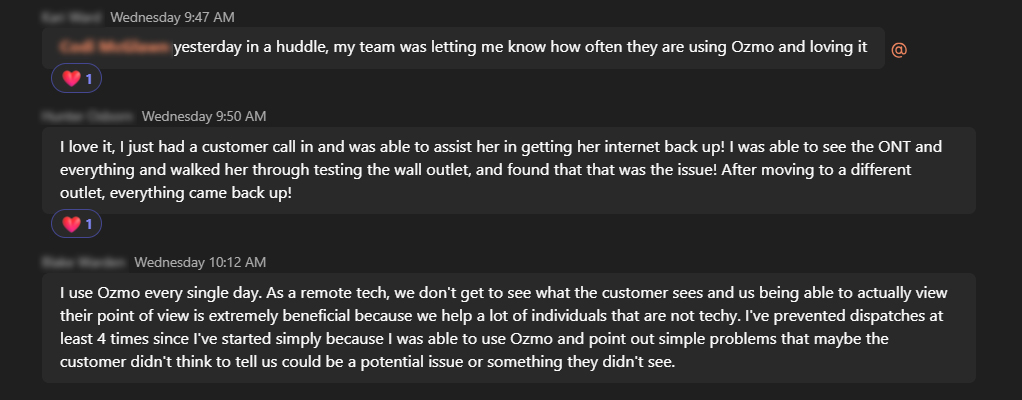
Feedback collected from end-user CSR agents while at Ozmo
View a detailed look at Ozmo for Agents →
✅ Results:
I suggested a simple additional feature within our product to capture what support guides and steps CSR agents utilized as an active historical feature - provided to them automatically after each engagement. Not only did this add convenience and simplify their workflows, but by supplying a record of activity within our product - it offered a strategic opportunity for the subsequent CSR to easily jump back into our product by following links supplied within the captured notes.
Even better, this proposed feature could be coupled with an existing capability which enabled sending tutorials and support content to the customer from within Ozmo for Agents. This automatic, intelligent capture of what content the CSR used meant they could now leverage their history easily for either their CRM Call Notes or for recommended packages to be shared with the customer as summary.
Related Case Studies
My ExperienceImproving Customer Service
Contact Center
Service Design Research
My ExperienceBuilding from scratch
Research Practice
designed around sprint cadence
My ExperienceStrategically Aligning
Users to Business Value
leveraging Discovery


